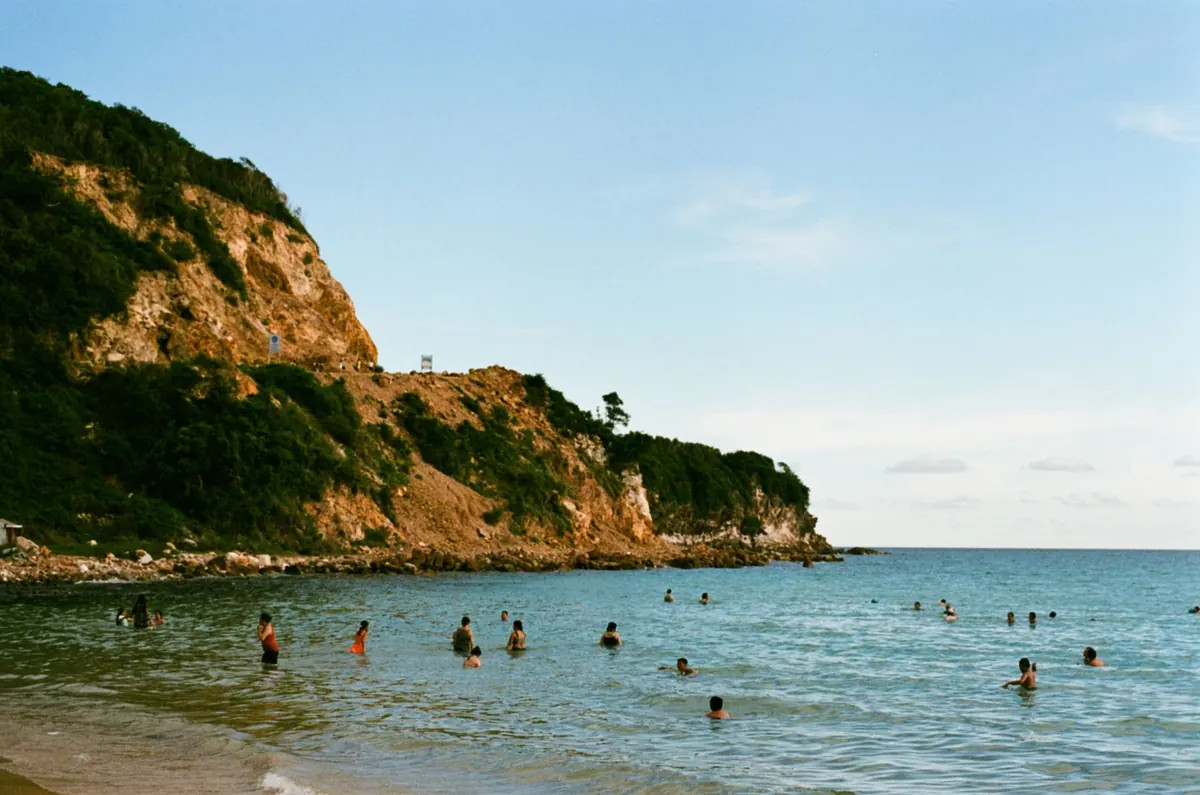
The train crosses the Tamar just after Plymouth, and Cornwall starts with a flash of water, a couple of moored boats and a hillside of gorse. Twenty minutes later you are at Liskeard, or already deep into the peninsula with a window seat, a pasty and no argument about who is driving. Cornwall's rail network is small but surprisingly useful: a main line down the spine of the county, half a dozen branch lines peeling off towards the coast, and buses that fill the gaps for the places the tracks never reached. A weekend here without a car is not a compromise. Quite often it is the better trip.
Sort your tickets before you travel
The long journey is where the money goes, so deal with it first. If you are coming from London or the Midlands, advance singles on the mainline service are usually far cheaper than a walk-up fare bought on the day, and they come with a reserved seat. Book two or three weeks out if you can, and check whether a railcard pays for itself across the return trip. The Night Riviera sleeper from Paddington is another option if you would rather sleep through the miles, though you will need to book well ahead.
Once you are in Cornwall, local fares are modest and the branch lines are short. Two things are worth knowing about:
- Rover and day tickets. A county-wide ticket covering both trains and buses can work out cheaper than buying singles for every hop, particularly if you plan to mix the two. Ask at a staffed ticket office or check with the operator before you travel, because validity and prices change.
- PlusBus add-ons. Several Cornish stations, including Truro, Penzance, Falmouth and Newquay, offer a bus add-on to your rail ticket. It is a small extra on top of your train fare and covers unlimited local buses in that town for the day.
If your trip falls in July or August, buy before you board where possible and expect the St Ives branch to be busy. Turn up for the shuttle at St Erth with time to spare rather than sprinting for the doors.
Choose one base and stay there
The biggest mistake car-free visitors make is trying to sleep in three places in two nights. Cornwall's trains are punctual but the county is long, and packing and moving eats a morning. Pick a single base near a station with good bus links: Truro for the centre and both branch lines, Penzance for the far west and the Land's End coast, Falmouth for the Maritime Line and the ferries, or Newquay at the end of the Atlantic Coast Line. St Ives is lovely but the branch line is its only rail link, so plan around that.
The branch lines are the whole point
These are the journeys people drive past without ever noticing. Each is short enough to ride for the pleasure of it and useful enough to build a day around.
- St Erth to St Ives. Around fifteen minutes along the Hayle estuary and then the open bay, with the town rising in front of you. It is the reason the park-and-ride exists, and the reason to sit on the seaward side.
- Truro to Falmouth. The Maritime Line runs down to Penryn and Falmouth Docks, handy for the town, the castle and the ferries across to St Mawes.
- Liskeard to Looe. A wooded valley run with a handful of tiny halts on the way. Skip the mainline connection and you miss one of the prettiest short trips in the South West.
- Par to Newquay. The Atlantic Coast Line climbs inland past Roche's granite stacks, then follows the Gannel estuary into town.
- Plymouth to Gunnislake. The Tamar Valley Line crosses the Calstock viaduct high above the river and takes under an hour, which makes it a good half-day if you are arriving via Plymouth.
If a timetable marks a stop as a request stop, the train will only call if you are clearly visible on the platform and put your hand out. Tell the conductor where you are getting off, too.
Buses cover what the trains cannot
Two operators do most of the work in Cornwall, and between them they link the railheads with the coast. Buses meet the train at Bodmin Parkway for Wadebridge and Padstow, at Penzance for the far west and the Land's End road, at Truro for the Roseland and the Lizard side, and at St Ives and Newquay for the seasonal open-top coastal routes. Those open-top services are a day out in themselves, with the top deck and the sea air, but many of them run only in the main season.
Three habits make bus travel painless. Check the timetable the night before, because rural services can be two-hourly and Sunday frequencies are thin. Arrive at the stop five minutes early and expect the bus to be roughly on time rather than precisely so. And ask the driver about a day ticket when you get on; buying a return for a route you will use three times is rarely the cheapest way.
A two-day plan that actually works
- Friday evening. Arrive at your base, drop bags, eat somewhere within walking distance. If you are in Penzance, the walk along the promenade before dark is a good way to end a travel day.
- Saturday morning. Take the mainline or a branch line to St Erth, then the St Ives shuttle. Walk the harbour, the back streets and Porthmeor beach, and have lunch in town.
- Saturday afternoon. Return on the branch line, then ride the open-top bus along the coast if it is running, or head back to base for a slow couple of hours.
- Sunday morning. Pick a second branch line rather than a second town. Looe from Liskeard, or Falmouth from Truro, both give you a seafront at the end of a short, scenic ride.
- Sunday afternoon. One more bus hop to somewhere small, then back to the station with an hour's buffer before your train home.
Before you leave the house
- Book mainline advance tickets and reserve seats in both directions.
- Save offline copies of timetables for every bus you plan to use.
- Charge a power bank; signal and sockets are not guaranteed.
- Pack for rain and wind whatever the forecast says, and bring shoes you can walk a few miles in.
- Keep your return train time in mind when you plan the last bus of the day, and treat the second-to-last as your real deadline.
Cornwall rewards a slower approach. Without a car you will see less of the map and more of the place: the estuary from a train window, the top deck of a bus in the sun, the walk between a station and a harbour. Plan the two or three journeys that matter, leave room for the rest to happen, and the weekend will look after itself.
Photo: Rush4 / Pixabay